
Our Approach
Descartes’ emblematic statement “I think therefore I am” has been the unofficial mantra of western culture for centuries, despite a curious lack of scientific evidence to validate the claim.
In the desire to elevate ourselves above the rest of nature we have deified our capacity for rational thought, and ironically accepted a profoundly irrational notion of ourselves as a species. We are not, in fact, emissaries of pure logic; we are not disembodied brains valiantly struggling against a savage and unruly body. We are not AI.
We are homo sapiens, complex biological organisms, bodyminds comprised of multiple layers of nested cognition that have evolved symbiotically over hundreds of millions of years, from the microbiome to the nervous system on up to the prefrontal cortex, and the quality of our conscious experience — the quality of our lives — is dependent upon far more than our capacity for rational thought.
Even so, we tend to push ourselves forward according to ostensibly rational criteria, as insistent and demanding as any imperialist warlord or industrial magnate; not just in our work or our schooling, but in virtually every facet of life. In our free time, our intimate relationships, even our hobbies, we tend to plan, schedule, overload on information, and relentlessly optimize, leaving precious little time to simply think, or feel, or be.
As a society we seem to be addicted to the comfort of false certainty; we trick ourselves — for a time — into feeling successful or worthy by following the dictates of a simplistic and misguided understanding of human life.
It’s enough to take a calm walk in the forest to notice that real growth, in all of its complexity and unpredictability, is almost never linear. It’s not constant. It isn’t shaped by rigid plans, and it doesn’t conform to any logic your prefrontal cortex can comprehend.
The truth is that a life well-lived requires us not just to think with greater clarity, but also to feel with greater depth, and move with greater freedom. It requires us, first and foremost, to heal our relationship with ourselves.
Our work, then, is to create an inner ecosystem better suited for human life, to nurture a network of interlacing relationships—between body and mind, self and other, human and nature—that allows you to live in closer connection with who you truly are.
Our process centers on helping you to cultivate mental clarity, emotional balance, and physical resilience. Every person is different, and every therapeutic process unique; whatever your age, your situation, or your priorities, however, the mental-emotional-physical pillars of our existence remain fundamental to the ways in which our species has evolved to perceive, process, and engage with life. By ignoring the importance of any of these three pillars, you risk sacrificing the integrity of all.
We work with a wide range of people from many walks of life, and adapt our approach to fit your needs, rather than the other way around. You can choose from immersive individual therapy, group retreats, or online support.
Want a bit of guidance to see what’s a good fit?
It may be that when we no longer know what to do
we have come to our real work,
and that when we no longer know which way to go
we have come to our real journey.
Wendell Berry
If you want to access and restructure your ingrained patterns of thought or feeling — the existential scars you’ve come to confuse for your self — psychedelics are the most powerful catalysts for growth humans have yet discovered.
With adequate screening, mindful preparation, professional guidance during the experience, and dedicated integration afterward, psychedelic-assisted therapy has consistently been shown to provide far more profound and lasting results than any other modality of therapy or pharmaceutical intervention.
We are headquartered in Spain, where the possession, use, and purchase of many psychedelic substances is fully legal, though their sale is not; as such, we charge solely for our therapeutic services, and our pricing is not tied the consumption of any substance.
We are proud to work within the bounds of enlightened legal frameworks in select locations around the world to provide a safe and effective therapeutic experience for people who are committed to their process of inner exploration.
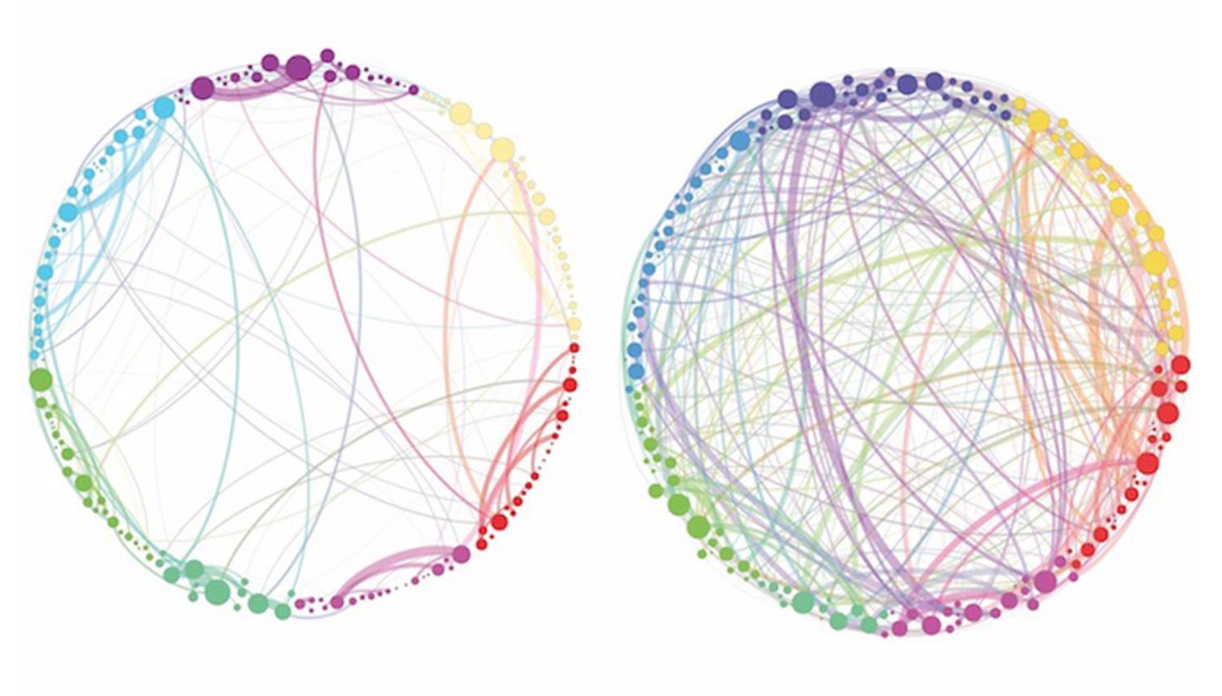
Your brain…and your brain on psilocybin
In research conducted at Hopkins University, more than 70% of participants rated a single encounter with psychedelic therapy as one of the top five most significant events of their lives.
Authentic Experience
We have deep respect for traditional people and their traditional medicine, but in our view the western impulse to seek out personal or spiritual self-realization in an exotic locale is generally misguided.
The power of these plants lies in their ability to help us experience ourselves more deeply within, and we believe that for this process to be truly effective, we — like the traditional peoples who inspire us — need to develop our own practices and methods, in a context that makes sense for our own lives.
Because of plant medicine’s hallowed place in traditional hunter-gatherer societies, many people in the west have come to think that an “authentic” experience requires them to go to the jungles of Peru for a weeklong retreat where they will participate in ceremonies developed in an alien cultural context, take part in rites conducted in a language they don’t understand, and connect to the power of a natural setting they can’t comprehend.
This, by many metrics, is far from being an authentic experience.
In almost all traditional societies, expanded states of consciousness are reserved exclusively for shamans, and for very specific purposes, such as healing the ill or divining where to find game during the hunting season. It is made available to other members of the group only at key moments of their lives, most often for coming-of-age ceremonies, where they play an invaluable role in the process of becoming a fully-fledged adult.
The entire advent of “ayahuasca retreats” and other similar concepts is a very recent invention, designed to sell foreign tourists a highly stylized version of what is actually a very different traditional practice. It would be something like going to visit the Notre Dame to get an authentic taste for life as a Catholic monk.
These objections aside, it is obvious that many westerners have had powerful experiences in the Amazon, just as many atheists have had powerful experiences listening to the choir sign latin hymns in the majesty of Notre Dame.
Even though many essentials of the traditional practices have been changed to appeal to the expectations of “spiritual tourists” for whom the bulk of the ceremony is lost in translation, the medicine still finds a way to work its magic.
The real question is, how do you make the magic last?
We believe that the entire impulse to escape — to seek out mysterious and exotic experiences — in many ways contradicts the purpose of the psychedelic process itself, which is to take a journey inward, toward our most authentic selves.
The most significant problem in our view is that when you fly back to the land of AI, traffic jams, and social media from which you escaped, it is extremely difficult to integrate the lessons from your Amazonian experience into our modern reality with all its pressures and obligations. How do you explain what you felt to your partner, your kids, or your boss? How do you make sense of a brief glimpse of oneness, of spiritual bliss?
It can be quite challenging to translate such powerful experiences into practical reality, and often the sheer difficulty of the task holds us back until the inertia of daily life takes over and we fall back into more or less the same routines as before.
Without proper preparation — specific to your needs, to your reality — and steadfast commitment to integration of the lessons learned afterward, plant medicine may be mind-blowing, but it is unlikely to contribute meaningfully to your personal growth and development.
Unfortunately, it’s almost heretical to point out the obvious fact that the entheogenic tourism industry is driven largely by the false promise of a spiritual bypass. It is sold to us as though it were a magical shortcut to happiness or health or enlightenment, biohacking for the soul that will obviate the need to do the internal work that we all instinctively know we need.
Nothing could be further from the truth.
Psychedelic therapy will put your problems front and center. It will help you to see them with incredible clarity, and feel them with incredible power. Everything you hoped to escape or erase will suddenly loom up inside you, more real than real. You need to be ready; not just willing, but capable and eager to see and feel more deeply within. When you are properly prepared in both body and mind; when you’ve reached a level of calm and awareness that will allow you to greet this opportunity with open arms, the experience is nothing short of transformational.
Perhaps everything that frightens us is, in its deepest essence, something helpless that wants our love.
Rainer Maria Rilke
It is with the greatest respect for the traditional cultures through which plant medicine has been preserved, and for the medicine itself, that we have been called to create a different approach, more attuned to the real needs of those of us living in the so-called “developed” world.
We only facilitate encounters with plant medicine for individuals or small groups, and always with a careful process of dialogue and preparation beforehand, professional support throughout the experience, and comprehensive guidance in integration afterward.
If you’d like to set up a call to discuss working with us, please use the button here:
If you prefer to carry on reading, feel free to continue below.
Dream the impossible dream and the world will not grind you under, it will lift you up. This is the trick. This is what all these teachers and philosophers who really counted, this is what they understood…this is how magic is done: by hurling yourself into the abyss and discovering it's a feather bed.
Terence McKenna
Consider
Consider for a moment that you are not who you think you are. Not that we know and you don’t, but simply that as humans our innermost thoughts, feelings, motivations, and identities — our selves — are far more than our conscious minds alone. Cogito ergo sum, as mentioned earlier, largely misses the point. The part of you that is reading these words, for example, is only a very small of your brain, and an even smaller part of your self, and very far from being in control of the way you live your life.
We are incredibly complex organisms, perhaps best understood as a bodymind of which conscious thought is an important part, but nowhere near the defining feature. We have known for centuries that even seemingly abstract thought has a physical substrate; our brains, after all, are biological organs. We also know that we have brains in our hearts and guts, which process and transmit information quite differently from our head-brain, without any clear hierarchy established between the three. But recent studies of fungi, plants, and slime molds suggest that intelligence is no way exclusive to neuronal activity. It seems quite reasonable, and coherent with lived experience, to consider that our bodies have their own form of intelligence, far older, and in some ways more powerful than the mental activity with which we tend to identify ourselves.
So it might be more useful to think of ourselves as something less fixed, less rational, and less ordered than we would probably like to believe. Imagine your existence as a brief flash of life suspended between two eternities; a life formed by the continual interplay between the twin forces of consciousness and being, both of which are expressed through your body and your mind; imagine yourself as a sort of energetic flux, something like the interaction of rebounding ripples caused when somehow a pebble of consciousness was dropped into the pond of being. What if, as ancient tantric texts teach us, the highest expression of our being is a deeper, more vibrant consciousness? What if the highest expression of our energy is love?
Whatever the case may be, it makes little sense to identify solely with the mind or the body, or to place one above the other. When it comes to understanding ourselves, and to living fully, the arrows of causality seem to point in every direction.
At primal nature we are dedicated to getting at the heart of what it means to be a human. Not just with abstract understanding, but with real lived experience. Understanding is good, and necessary, but it’s far from enough. We also need to move and breathe and express ourselves freely; we need to work our way down to the source of our energy, learn how to nurture and harness it; then, slowly, consciously, build ourselves back up into something far more powerful and authentically ourselves, than we ever were before.
Until you make the unconscious conscious, it will guide your life and you will call it fate.
Carl Jung
The Roots of Human Experience
Consider for a moment that you are not who you think you are. Not that we know and you don’t, but simply that as humans our innermost thoughts, feelings, motivations, and identities — our selves — are far more than our conscious minds alone. Cogito ergo sum, as mentioned earlier, largely misses the point. The part of you that is reading these words, for example, is only a very small of your brain, and an even smaller part of your self, and very far from being in control of the way you live your life.
We are incredibly complex organisms, perhaps best understood as a bodymind of which conscious thought is an important part, but nowhere near the defining feature. We have known for centuries that even seemingly abstract thought has a physical substrate; our brains, after all, are biological organs. We also know that we have brains in our hearts and guts, which process and transmit information quite differently from our head-brain, without any clear hierarchy established between the three. But recent studies of fungi, plants, and slime molds suggest that intelligence is no way exclusive to neuronal activity. It seems quite reasonable, and coherent with lived experience, to consider that our bodies have their own form of intelligence, far older, and in some ways more powerful than the mental activity with which we tend to identify ourselves.
So it might be more useful to think of ourselves as something less fixed, less rational, and less ordered than we would probably like to believe. Imagine your existence as a brief flash of life suspended between two eternities; a life formed by the continual interplay between the twin forces of consciousness and being, both of which are expressed through your body and your mind; imagine yourself as a sort of energetic flux, something like the interaction of rebounding ripples caused when somehow a pebble of consciousness was dropped into the pond of being. What if, as ancient tantric texts teach us, the highest expression of our being is a deeper, more vibrant consciousness? What if the highest expression of our energy is love?
Whatever the case may be, it makes little sense to identify solely with the mind or the body, or to place one above the other. When it comes to understanding ourselves, and to living fully, the arrows of causality seem to point in every direction.
At primal nature we are dedicated to getting at the heart of what it means to be a human. Not just with abstract understanding, but with real lived experience. Understanding is good, and necessary, but it’s far from enough. We also need to move and breathe and express ourselves freely; we need to work our way down to the source of our energy, learn how to nurture and harness it; then, slowly, consciously, build ourselves back up into something far more powerful and authentically ourselves, than we ever were before.
Terence McKenna
Few people have been so eloquent or colorful in their advocacy of expanded states of consciousness as the late Terence McKenna.
This video provides a salient highlight of some of his more essential teachings

Consider that as living beings our most deeply ingrained instincts may simply be more complex iterations of the same electromagnetic impulses that literally hold us together: attraction and repulsion.
Like all forms of life, from bacteria to beech trees, we too can be defined by our propensity to move toward that which we sense will nourish us and move away from that which we sense will do us harm.
Many millions of years ago, we animals refined these abilities further, with the evolution of sensation. That is why we feel pain and pleasure, which register largely in the brainstem, or so-called “reptilian brain”: our sensations are our corporeal guides to interfacing with the world. They helped us to react appropriately to harmful or beneficial stimuli long before our “conscious” minds ever existed, and they continue to do so, on a far deeper level.
A few million years down the line, many of us animals developed our capacities further with the development of the limbic brain, where we register emotions. Thus, from pain and pleasure we evolved fear and desire, and all their countless derivatives like anger, sadness, or elation, that largely dictate the quality and texture of our lived experience. Your emotions feel unique and personal, and in some sense they are; but they are also only a slightly more complex version of the same basic set of reactions — essentially attraction and repulsion — that all living beings share.
Relatively recently, we as humans developed even further, with the prefrontal and cerebral cortexes, gaining the ability to translate these corporeal and emotional processes into more complex sensations like worry, hope, or doubt; even the seemingly abstract processes such as imagination, analysis, and calculation could be said to derive from these same basic instincts.
Letting go gives us freedom, and freedom is the only condition for happiness. If, in our heart, we still cling to anything — anger, anxiety, or possessions — we cannot be free.
Thich Nhat Hahn
If you dig deeply enough into any any thought you have, any decision you make, or emotion you feel, its apparent uniqueness or mystery begins to dissolve when you realize that it just another way to bring you somehow closer to what you sense will nourish you, and further from what you sense will do you harm. The way that we experience the world in virtually every detail is shaped by our fundamental limbic patterns of processing fear and desire, and given its intensity by the way our bodies and brainstems process our pain and our pleasure.
This is why all of the work we do at primal nature begins by transforming our relationship to stimuli along these two fundamental axes of experience. We move through the fundamental experiences of pain and pleasure, transforming automatic reactions into conscious processes; in body, sensation, emotion, and thought, we replace fearful judgment with acceptance, compassion, and eventually love.
No matter what the level of complexity at which you want to understand or optimize or reshape yourself, experience has shown us that this is the best place to start. This is by far the most powerful and effective way that we can transform our relationship to the world around us, and more importantly to ourselves.
David Foster Wallace
A brilliant talk by a brilliant teacher. Here he elucidates the human condition and points a way toward its betterment with refreshing clarity and creativity. At primal nature we work with the full bodymind so as to actually make it possible to follow something like the path he sets our here:
“How to keep from going through your comfortable, prosperous, respectable adult life dead, unconscious, a slave to your head and to your natural default setting of being uniquely, completely, imperially alone.”